Data Feminism
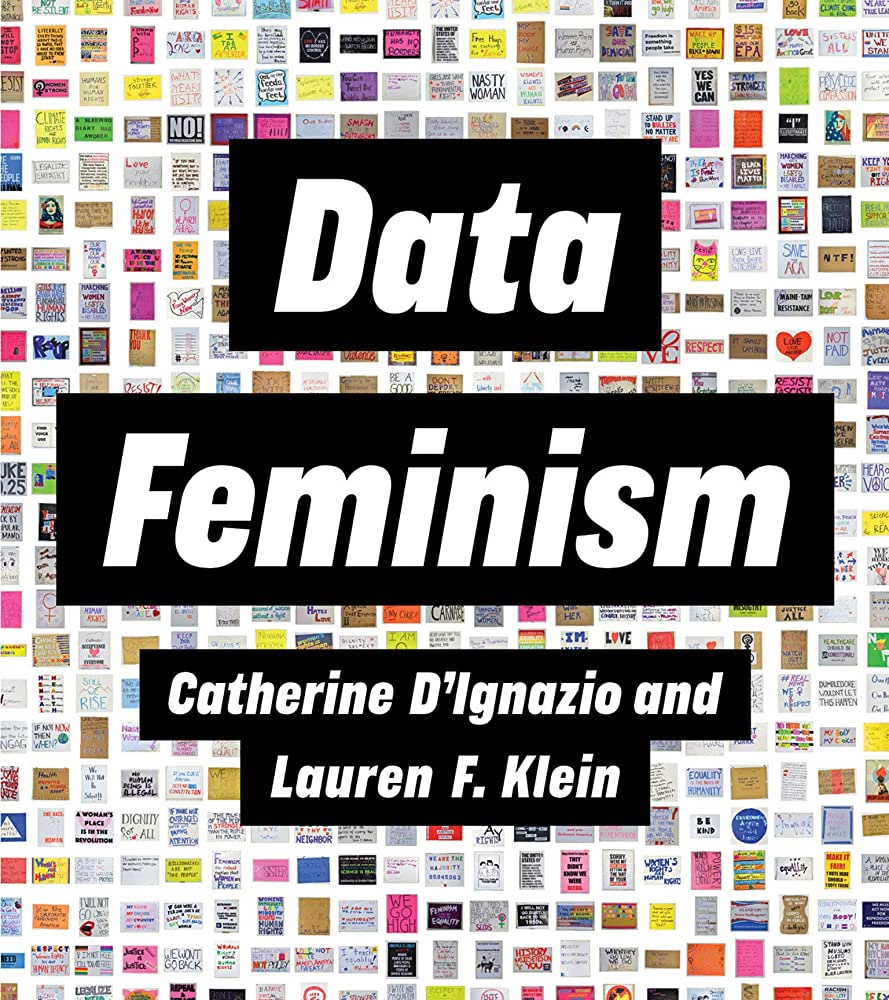
Data Feminism is not necessarily a book about visualizations. It doesn't aim to teach a new way of visualizing data. It doesn't talk about chartjunk or get into scientific precision on optimizing graphs. Rather, Data Feminism is meant to help broaden our scope of the world and address the intersection of data science and feminism. Catherine D'Ignazio and Lauren F. Klein make a detailed argument that data is not objective and that without context it can help perpetuate existing social inequalities. They not only identify areas of existing inequality and underrepresentation, but also provide us with a framework for using data in a more ethical and inclusive manner.
D'Ignazio and Klein answer three question throughout the book:
1) Who uses data science?
2) Who is data science for?
3) Whose interests benefit the most from data science?
The short and dirty of it is that those who wield power are the ones that benefit the most from data science. Power doesn't mean presidents and royalty (although they are without a doubt powerful). Rather, it means those who already benefit the most from the our current social, political, and economic norms. In other words, men. Specifically white, cisgender, heterosexual men. If you're paying any attention to the cultural zeitgeist this should come as no surprise. This is not a novel idea, but it does generate volatile reactions.
The authors argue that if data science is predominantly collected by white cishet men, used by white cishet men, for the benefit of white cishet men, then there must be "counterdata" that can bring in a different perspective and context. A big issue with the current way that data science operates is that it assumes that the numbers are completely neutral and objective. While on its face this might sound true, it removes accountability from the ones that report the data and in the worst of cases can give rise to racist slogans that are backed by "data" such as the infamous 13/52.
As a response, D'Ignazio and Klein provide a framework with 7 principles. Those principles are: Examine Power, Challenge Power, Elevate Emotion and Embodiment, Rethink Binaries and Hierarchies, Embrace Pluralism, Consider Context, and Make Labor Visible.
The principles are dense and well thought it (the book is dedicated to these principles!) and this would become an excessively long post to get into all them. The gist of the principles, however, is that they are an examination of power and allow vulnerable people to re-contextualizing data and empower their ideas. Rather than operating from this point of view that numbers hold truth, the authors posit the opposite: numbers and data absolutely generate emotions in people and the good intentions of naive data scientists can be twisted due to a lack of scope. By bringing in people from various backgrounds, especially from those that have been historically disenfranchised, data can become a tool to lift these voices and create actionable change in the world.
Data Feminism is a MUST read for everyone, not just data scientists.